
Table of Contents
- Why storage solutions for small homes matter
- Attic storage solutions that work
- Installing attic flooring on uneven joists
- Vertical storage: making the most of wall space
- Small space organisation hacks for everyday living
- Multi-functional furniture and hidden storage
- Planning your storage strategy
- Frequently Asked Questions
Last Updated: September 21, 2026
Why storage solutions for small homes matter
Space is precious in smaller properties. When every square metre counts, wasted potential feels like a genuine loss. Most homeowners with compact living areas face the same problem: they’ve got storage space they can’t access safely or efficiently. That’s where effective storage solutions for small homes become essential.
The difference between a neglected attic and a functional storage asset is straightforward. Accessible, well-organised storage removes the pressure to declutter constantly and creates breathing room in your living areas. O’Meara Attic Solutions helps homeowners transform underutilised loft spaces into practical storage that actually works.
According to research from the Irish Institute of Architects, effective use of vertical and overhead space can increase usable home capacity by 20-30% without requiring extensions or renovations. That’s significant when you’re working with limited square footage.
The challenge isn’t just about finding space, it’s about making it accessible, safe, and properly organised. Poor access to attic storage means items stay boxed up and forgotten. Uneven flooring creates safety hazards. Draughty hatches waste heating energy. These aren’t minor inconveniences; they compound over time.
Attic storage solutions that work
Your attic is typically the largest untapped storage area in any home. The problem is that most attics aren’t designed for regular access or safe storage. Converting them requires three core elements: safe access, proper flooring, and organisation systems that match your actual needs.
Attic ladder installation is the foundation. Without safe, easy access, your loft remains a place you visit once a year to shove something in the corner. A proper attic ladder, fitted securely and engineered to handle regular use, changes that equation entirely. You’ll actually use the space, which means you’ll organise it properly.
Flooring transforms raw joists into a usable platform. Uneven joists are common in older properties, but they’re no barrier to creating safe storage. Proper flooring installation on uneven joists requires careful assessment and the right materials, but the result is a stable, safe surface that won’t shift or creak under weight.
Organisation systems matter more than people expect. Labelled boxes, shelving units, and climate-appropriate storage containers keep items accessible and protected. The goal is creating a system you’ll maintain, not one that becomes a dumping ground.
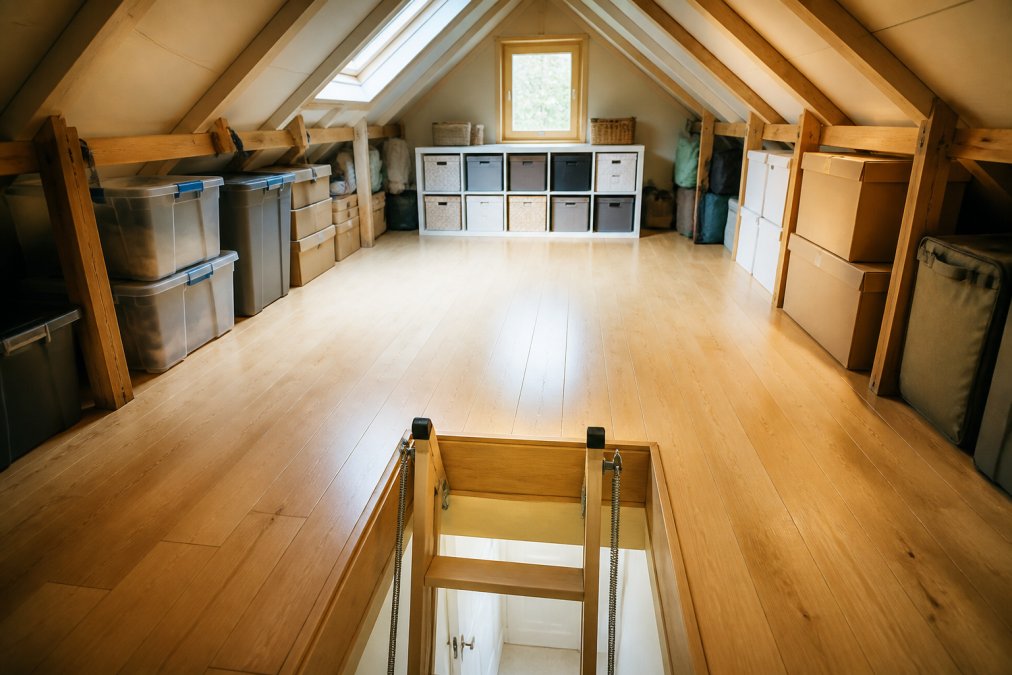
O’Meara Attic Solutions provides complete attic conversion packages that address all three elements. The 10-year guarantee on labour and materials means you’re investing in something built to last, not a quick fix that deteriorates in a few years.
Installing attic flooring on uneven joists
Uneven joists are one of the most common concerns homeowners raise. Older properties especially tend to have settled unevenly over decades, creating a floor that’s anything but level. The good news is that installing attic flooring on uneven joists is entirely achievable with the right approach.
The process starts with a proper assessment. A surveyor needs to measure the variance across your joists and identify any structural concerns. This isn’t guesswork, it’s precision work that determines what solutions will actually work in your space.
Levelling options depend on the degree of unevenness. For minor variations, shimming (adding thin wedges under joists) can create a more even base. For greater variances, engineered flooring systems are designed to bridge uneven surfaces without requiring structural changes. These systems distribute weight evenly and create a safe, stable platform.
The materials matter significantly. Standard plywood doesn’t work well on uneven joists because it flexes and creates weak points. Purpose-built attic flooring systems use thicker, stronger materials that span across multiple joists and handle the irregularities of older properties.
Installation timing is critical too. Rushing the job or cutting corners leads to safety issues and premature deterioration. Proper installation takes time, which is why experienced installers are worth the investment. The O’Meara Attic Solutions team brings over a decade of experience in supplying and fitting attic ladders, which includes working with challenging situations like old houses with quirky joists.
Vertical storage: making the most of wall space
Vertical storage is where small-space organisation truly shines. When floor space is limited, walls become your best asset. The principle is simple: use height instead of footprint.
Wall-mounted shelving systems transform empty vertical surfaces into functional storage. The key is choosing systems that suit your needs and won’t overload your walls. Adjustable shelving works well because you can reconfigure as your storage needs change. Fixed shelving is more stable for heavy items.
Pegboards and wall-mounted organisers are excellent for items you access regularly. Tools, seasonal decorations, and hobby supplies stay visible and within reach instead of buried in boxes. This visibility matters, you actually use what you can see.
For attic spaces specifically, sloped ceilings create unusual wall configurations. Storage solutions need to work with these angles rather than fight them. Bespoke shelving that follows the roofline maximises usable space and looks intentional rather than awkward.
The critical mistake is overcrowding. Vertical storage only works if items remain accessible. Stacking boxes to the ceiling defeats the purpose, you’ll never reach the ones at the back. Aim for organisation systems that keep frequently used items at eye level and seasonal items higher up.
Small space organisation hacks for everyday living
Organisation systems only work if they’re sustainable. The best storage solutions for small homes match how you actually live, not how you think you should live.
Start by categorising ruthlessly. Everything in your home should have a purpose or bring genuine value. If something doesn’t fit either category, it’s taking up space that could be used more effectively. This isn’t about minimalism as a lifestyle choice, it’s practical mathematics.
Labelling is underrated. Clear labels on boxes and containers mean you’ll find what you need without unpacking everything. This is especially important for attic storage where items might sit for months between uses.
Rotation systems work well for seasonal items. Winter clothes, holiday decorations, and seasonal equipment can live in attic storage and rotate into your living space as needed. The key is creating a system that’s easy enough to actually maintain.
Vertical filing and stacking within containers maximises space. Flat stacking wastes space because you have to remove everything to access items at the bottom. Vertical organisation lets you access items without disturbing the rest.
Climate control matters more than people realise. Attics can experience significant temperature and humidity swings. Proper ventilation and insulation protect stored items from damage. This is where proper attic flooring installation and sealed hatch systems become part of your storage strategy, not just access solutions.
Multi-functional furniture and hidden storage
Furniture that serves double duty is essential in smaller homes. A bed with built-in drawers, ottomans with storage interiors, and shelving units that define spaces while providing storage all reduce clutter in your main living areas.
Under-stair storage is often overlooked. If your property has stairs, the space beneath them is typically wasted. Custom-fitted drawers or shelving transform this dead space into functional storage for shoes, seasonal items, or household supplies.
Wall-mounted desks and fold-down tables create workspace without consuming floor area. When not in use, they disappear against the wall, freeing up the room for other purposes.
Kitchen storage is particularly critical in smaller homes. Pull-out pantries, corner carousels, and vertical spice racks maximise every centimetre of cabinet space. The goal is making items visible and accessible rather than buried in the back of a cupboard.
Hidden storage in furniture works best when it’s genuinely useful, not just clever. A storage bench at the foot of your bed only works if you actually use it regularly. Otherwise, it’s just a piece of furniture taking up space.
Planning your storage strategy
Before implementing any storage solutions for small homes, you need a clear plan. Random purchases of storage containers and shelving units create chaos, not organisation.
Start by measuring your available space carefully. Your attic, under-stair areas, and wall surfaces all have specific dimensions. Know these numbers before making any purchasing decisions. This prevents buying items that don’t fit or won’t work with your layout.
Categorise what you actually need to store. Daily-use items need accessible, convenient storage. Seasonal items can live in less convenient locations. Items you rarely use should be stored where they won’t waste prime real estate.
Prioritise accessibility based on frequency of use. Items you access weekly should be at eye level or easily reachable. Items you use once or twice a year can be higher up or in less convenient locations.
Consider climate and protection. Some items need protection from temperature fluctuations, dust, or moisture. Your attic storage strategy should account for this, proper flooring, ventilation, and sealed containers all contribute to item preservation.
Budget matters, but view it as an investment. Quality storage solutions last longer and work better than cheap alternatives.
Frequently Asked Questions
What are the best storage solutions for small homes?
The most effective storage solutions for small homes combine multiple approaches: utilising your attic with proper flooring and access, installing vertical shelving and wall-mounted storage, choosing multi-functional furniture with built-in compartments, and using under-bed storage. Professional attic solutions with secure flooring and ladder access unlock significant space whilst maintaining safety and energy efficiency. The key is assessing your home’s specific layout and prioritising the areas that will deliver the most usable storage.
Is attic flooring a viable storage solution for small homes?
Yes, attic flooring transforms unused loft space into safe, accessible storage. Properly installed flooring distributes weight evenly across joists, prevents damage to ceilings below, and creates a secure platform for boxes and items. Professional installation ensures the flooring works with your home’s structure, including uneven joists common in older properties. When combined with a quality attic ladder, this solution provides substantial additional storage without taking up floor space in living areas.
How can I organise a small home with no storage space?
Start with vertical storage: install shelving on walls, use tall bookcases, and add wall-mounted organisers. Declutter ruthlessly and keep only what you use regularly. Invest in multi-functional furniture such as ottomans with storage, beds with drawers, and nesting tables. Use the space under stairs, behind doors, and inside wardrobes more efficiently. If you have an attic, even an unfinished one, professional flooring and ladder installation creates immediate accessible storage. Small space organisation works best when combined with regular decluttering habits.
What should I consider before installing attic storage?
Before installation, assess your attic’s current condition, including joist spacing, load capacity, and insulation. Determine whether your existing hatch provides adequate access or if an attic ladder would improve safety and usability. Consider your home’s age and structure, as older properties often have uneven joists requiring specialist installation. Professional assessment identifies potential issues such as air leakage or inadequate ventilation before work begins. A 10-year guarantee on labour and materials provides long-term protection and peace of mind.


